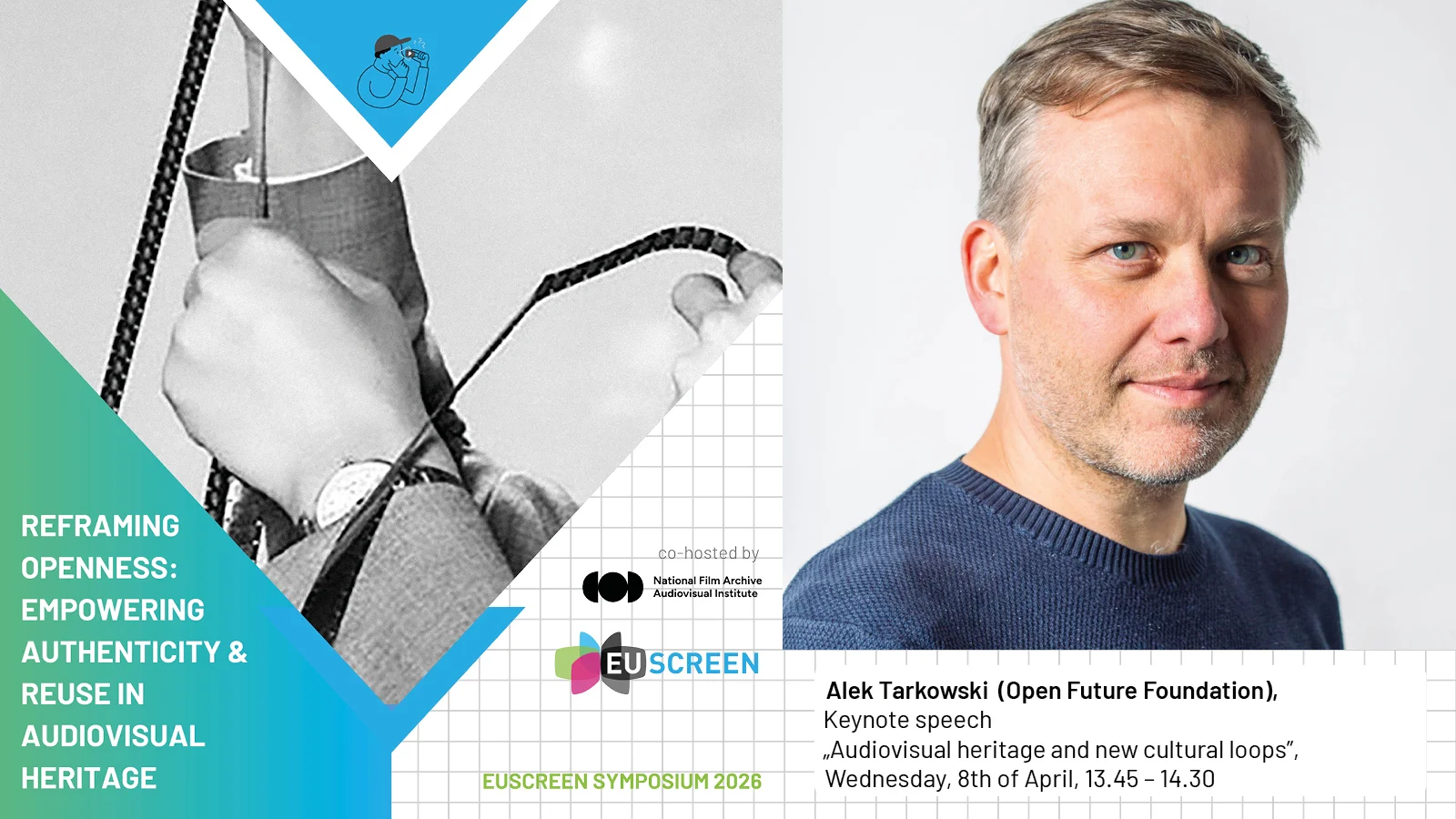
Alek is the Director of Strategy at Open Future. He has 20 years of experience with public interest advocacy, movement building and research into the intersection of society, culture and digital technologies. He is a sociologist by training and holds a Ph.D. in sociology from the Polish Academy of Science. He is currently also a member of the Board of Wikimedia Europe.
In 2010 he established Centrum Cyfrowe, one of the leading Polish organizations promoting openness and internet users’ rights. He led Centrum Cyfrowe for ten years as the Director and President of the Board. Before founding Centrum Cyfrowe, he was a strategic advisor to the Prime Minister of Poland.
In 2005, he co-founded Creative Commons Poland and had since then been an active member of the Creative Commons network. He co-chaired, with Ryan Merkeley, the Creative Commons Network Strategy process. He was a member of the Board of Directors of the Creative Commons organization in 2021-2024.
Alek has been involved in a range of initiatives aimed at charting new directions and strategies for a range of organizations and the open movement itself. He led (with Nicole Allen), the 10th Anniversary review of the Cape Town Open Education Declaration. He co-chaired (with Ryan Merkeley) CC’s network strategic review process, which led to the creation of the new CC network model in 2017. He is one of the authors of the Open Policy Index, an effort to map open policies worldwide. In Poland, he has been involved in developing epodreczniki.pl, the open public textbooks initiative. Finally, he co-authored A Vision for Shared Digital Europe, an alternative digital policy vision for Europe.
He is a member of the advisory board of the Inspiring Girls Polska foundation. He is also one of the co-founders of COMMUNIA, the European Association for the Public Domain. Together with other COMMUNIA members, he’s been involved since 2015 in European copyright reform advocacy, related to the European Copyright Directive legislative process. As a member of the Board of Strategic Advisors to the Prime Minister of Poland (2008-2011), he co-authored the strategic report “Poland 2030” (2009) and the Polish official long-term strategy for growth.
He is an alumnus of the Leadership Academy for Poland (class of 2017) and former Junior Fellow at McLuhan Program on Culture and Technology, University of Toronto.
He published, with Mirek Filiciak, a collection of essays titled “Two zero. Alphabet of the new culture and other essays”. Since 2006 he has been blogging for “Polityka,” a prominent Polish weekly.
Alek lives in Warsaw with his partner and two daughters. In his free time, he cooks, runs and bakes bread.
Topic summary
Heritage institutions are grappling today with a familiar question – how to keep collections open and reusable – in a fundamentally unfamiliar context. Their challenge is dealing with new cultural loops: new reuse patterns for heritage and creative work that are emerging today. These loops are shaped by emerging Artificial Intelligence technologies, but also by changing user behavior or the continuing platformization of the web.
The loops of the open web created positive feedback, where the sharing of resources generated value and various forms of reciprocity. Today, we face a Paradox of Open, as these positive loops begin to unwind. And existing methods of ensuring access and reuse become insufficient to protect the digital commons, and to ensure equitable use.
In the new cultural loops, machines are as significant as humans as users of heritage. They consume collections at unprecedented scale while simultaneously replacing them as the way people discover and access cultural material.
Drawing on research into how this paradox plays out across various types of digital commons, I will offer ideas how the heritage sector can function within the new cultural loops, and play an active role in shaping them. I will focus on governance models tied to the concept of digital commons, and infrastructural solutions built on a vision of public AI. These approaches allow institutions to remain open without becoming invisible infrastructure for commercial AI.