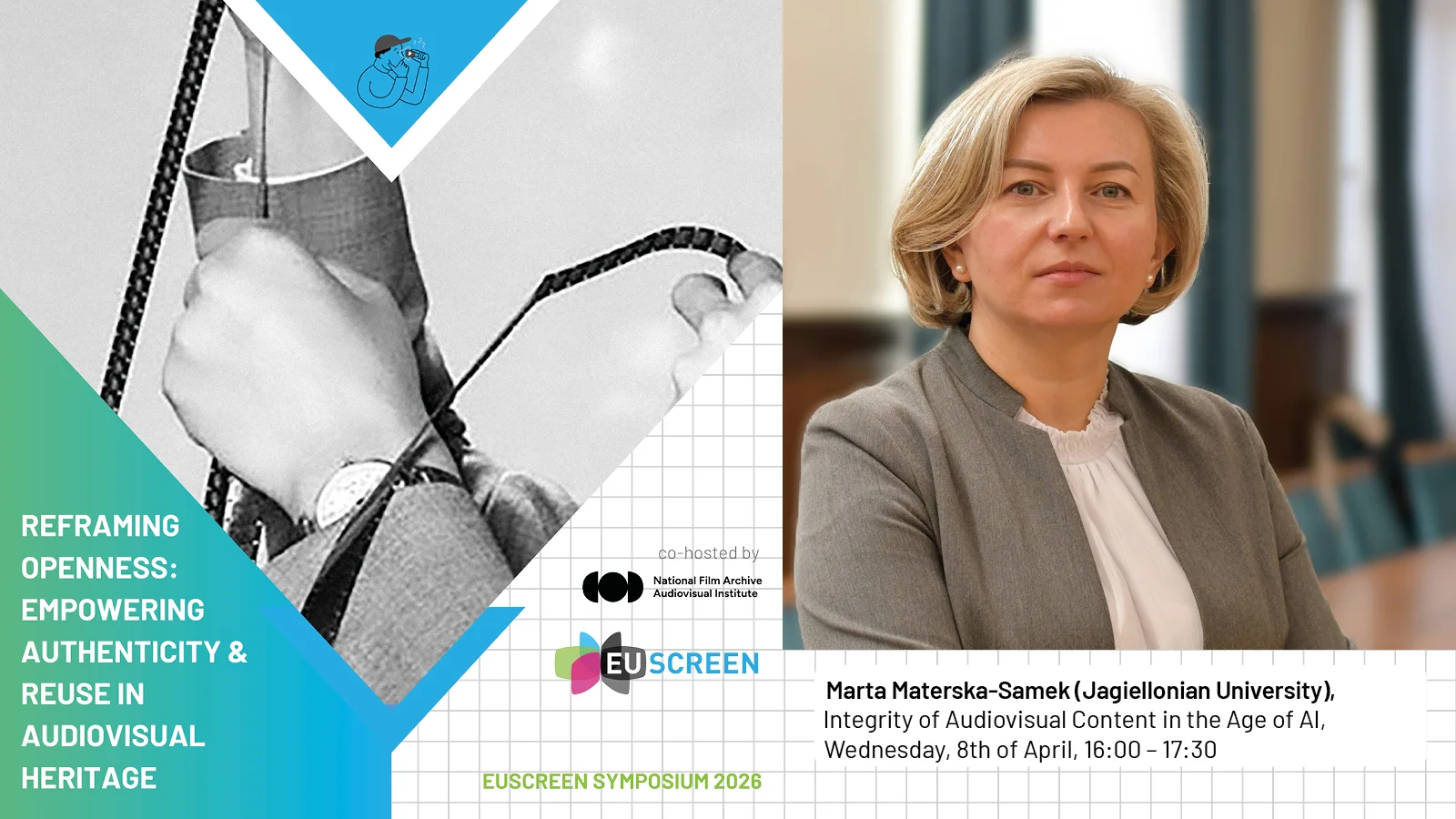
Marta Materska-Samek is an Assistant Professor and researcher at the Institute of Culture, Jagiellonian University (Kraków), specialising in the economics and ecosystem dynamics of the film and audiovisual industries. Her work sits at the intersection of cultural policy, creative industries research, and the triple transition – digital, green, and social – shaping audiovisual markets in Europe.
She is the lead author and principal researcher of the recently completed project “The Film Market in the Age of Digital, Green and Social Transformation – Models of Change” (2024–2025), funded by the Foundation for Polish Science (FNP). The project delivered a comprehensive mapping of audiovisual support models in Poland, strategic analysis of the Polish film market, and a set of policy recommendations developed in consultation with industry stakeholders – addressing sustainability, equal opportunity, and the structural challenges facing Polish cinema in a rapidly shifting distribution landscape.
Marta is also a guest researcher at CICANT (Lusófona University, Lisbon) within the CRESCINE Horizon Europe project, focusing on boosting the international ompetitiveness of film industries in small European markets,. She actively participates in further Horizon Europe research teams, including PACESETTERS (artistic and cultural entrepreneurship in the climate transition) and IMPULSE (immersive digitisation of cultural heritage). Her broader portfolio includes co-authoring and managing the ErasmusXR project (2020–2023), recognised as a good practice by the National Erasmus+ Agency, and serving as Interim Education Director during the startup phase of EIT Culture & Creativity (2022–2023), the European Institute of Innovation and Technology's community for the creative sectors. At the policy level, Marta chairs the Working Group for National Smart Specialisation – Creative Industries at the Ministry of Development and Technology.
Topic summary
The theme of this symposium – reframing openness – gains new urgency when set against the commercial realities reshaping how audiovisual content is distributed, discovered, and consumed in 2026. Marta Materska-Samek, researcher and audiovisual ecosystem specialist at Jagiellonian University, brings industry data into dialogue with archival values, asking what it means to be “when a platform algorithm determines what is findable, what feeds an AI model, and what remains effectively invisible — regardless of how openly licensed or digitally accessible it may be”.
Drawing on the latest signals from the global audiovisual market — from YouTube’s dominance of professional content distribution to the seismic shifts in broadcaster strategy visible at MIP London 2026 – the presentation maps the ecosystem pressures that archives now face: the winner-takes-all logic of platform curation, the growing dependency of public broadcasters on commercial distribution infrastructure, and the repositioning of audiovisual content – including heritage material – as raw data for AI model training.
Through three data-driven provocations – the long-tail invisibility of non-commercial content, the extraction of heritage material as AI training data, and the generational loss of audiences to social video – Materska-Samek invites the EUscreen community to articulate what authentic openness requires in the age of hyper-distribution: not just access, but sovereignty, context, and the integrity of the archival record.