Abstract / topic summary
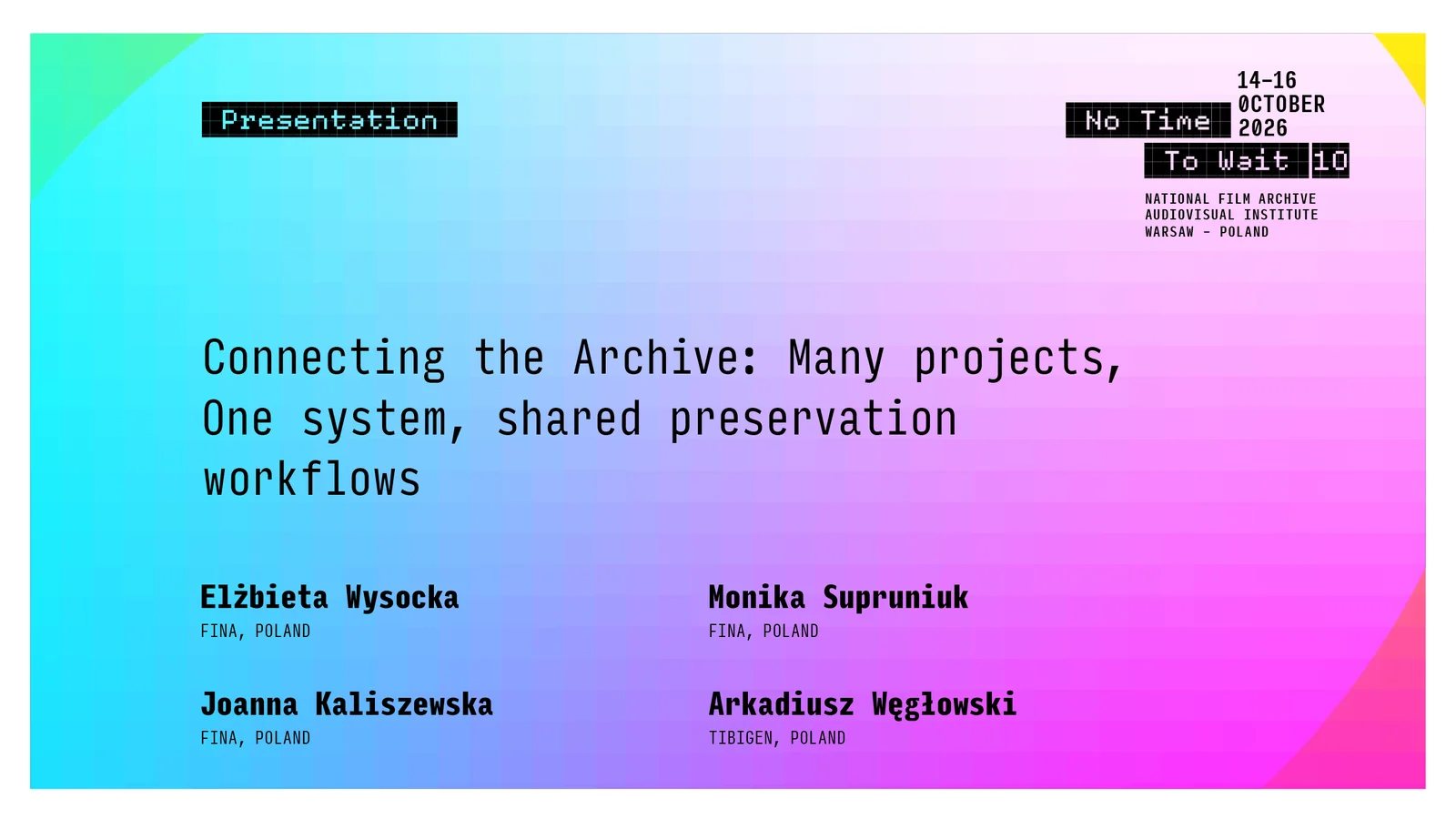
This panel explores how the implementation of a single, institution-wide Collection Management System/MAM has changed the way FINA works with its collections — strengthening collaboration, transparency and shared responsibility across the entire lifecycle of archival objects and our Institution.
Moving from fragmented, document-based workflows to an integrated, data-driven environment has allowed FINA to connect analogue and digital objects, preservation events, processes, people and responsibilities within one system. Beyond documenting collections, the CMS/MAM makes the work of the institution itself more visible: it enables staff to trace processes, manage digital preservation, connect actions to roles, retrieve diverse data and use it to identify patterns and support decision-making regarding conservation.
The panel brings together professionals representing different stages of the collection lifecycle — conservation, digitisation, acquisition and access — together with the developer responsible for the system. Through their different perspectives, how this changes both everyday workflows and the institution’s understanding of its own collections and processes.
Speakers summaries
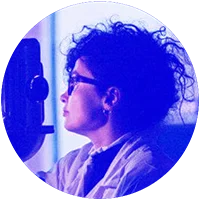
Monika Supruniuk
Monika Supruniuk is a conservator specializing in the conservation and restoration of paper, photography, and film. She graduated from the Faculty of Conservation and Restoration of Works of Art at the Academy of Fine Arts in Warsaw, where she earned her PhD and currently teaches the identification and conservation of photographic materials.
Since 2009, she has been affiliated with the National Film Archive – Audiovisual Institute (FINA). She collaborates with numerous public institutions and non-governmental organizations. She is the author of numerous scholarly publications and co-editor of books on the preservation and conservation of works of art.
She was awarded the Polish Ministry of Culture and National Heritage’s “Young Poland” scholarship in 2013 and a scholarship for outstanding young researchers from the Ministry of Science and Higher Education for 2018–2021. From 2013 to 2016, she led the National Science Centre (NCN) research grant “(In)Variability: Conservation of Analog Audiovisual Art Media.”
She has co-organized numerous public outreach and educational events and exhibitions. She also initiated the Warsaw edition of “Home Movie Day” and is one of the “Archaeo Sisters” (“Siostry Archeo”), a group organizing the Sounds of Silents festival.
Her research and professional interests focus on the conservation of analog media, the history of photographic and film technologies, the reinterpretation of audiovisual works in the digital age, as well as environmental and social responsibility in archival and conservation practices.

Elżbieta Wysocka
Elżbieta Wysocka is a restorer and researcher specializing in film, video and digital art. Trained in painting conservation and intermedia, she authored award-winning MA and PhD theses on audiovisual and media art preservation. She has led national and international projects in film restoration, digitisation, cataloguing and digital preservation at the at the National Film Archive – Audiovisual Institute. She also guided the development of the Media Asset Management at FINA. A member of the FIAF Cataloguing and Documentation Commission, she also worked as film restorer at Deutsche Kinemathek (FFE Program). Since 2024, she has been Deputy Director at FINA, where she oversees the Digital Archive, Digital Collections and Digitisation.

Joanna Kaliszewska
Digital archivist and cultural manager specializing in preserving audiovisual heritage. She was responsible for implementing digital storage solutions and metadata standards for the film and audiovisual collections of the National Film Archive and FINA. She has experience implementing data storage solutions in DAM and MAM systems in the public and commercial sectors. From 2020 to 2021, she led the FINA Digital Repository team, and since 2025, she has served as Head of the FINA Digital Collections and Collection Information Management Department.

Arkadiusz Węgłowski
Arkadiusz Węgłowski is an entrepreneur and software developer with over 20 years of experience working at the intersection of technology, media and audiovisual archives. He possesses wide experience gained in Poland, Europe, and around the world. He is the founder of Tibigen and the creator of Tibigen Digital Repository (TDR), developed in close collaboration with archival institutions and their users. His approach is rooted in long-term collaboration and a deep understanding of how technology needs to adapt to real-world archival practice. Rather than imposing fixed solutions, he focuses on building flexible systems that can respond quickly to changing requirements, workflows and the evolving needs of users. His work with FINA reflects this iterative approach, combining technical development with an ongoing dialogue with archivists, conservators and collection managers. At No Time To Wait 2026, Arkadiusz Węgłowski brings the perspective of a developer who has spent over a decade translating the changing needs of an archive into practical, sustainable technological solutions.